Written by: Pregnancybabycare Clinical Review Desk (Pharmacy & Therapeutics Research Team)
Fact-Checked & Reviewed by: Pregnancybabycare Medical Editorial Review Board (Clinical Pharmacy & Pharmacology Panel)
Standards: Clinically Reviewed | Evidence-Based Analysis | Directly referenced to FDA Approved Prescribing Information & Primary Peer-Reviewed Clinical Trials
Guidelines: Follows FDA Center for Drug Evaluation and Research guidance and clinical practice guidelines.
Industry & Technical Standards: Diagnostic procedures, architectural benchmarks, and installation specifications reflect certified trade guidelines, manufacturer technical manuals, and relevant safety standards.
⚠️ Medical Disclaimer & Emergency Guidance
This article is educational and does not substitute for individualized medical advice. If you experience severe abdominal pain radiating to the back, persistent vomiting, fasting glucose above 200 mg/dL, or signs of hypoglycemia (shakiness, confusion, diaphoresis), seek emergency care immediately or call 911. For urgent non-emergency questions, contact your prescribing clinician same day.
Discovering a pregnancy while taking semaglutide triggers an urgent, specific sequence of clinical decisions. The pregnant on Ozempic steps outlined here draw on FDA prescribing data, peer-reviewed pharmacokinetic evidence, and gestational cohort registries — not reassurance language. Stop the drug today, then work through what follows, because abrupt GLP-1 withdrawal creates its own metabolic hazard that most patients never anticipate.
What Happens to Semaglutide After You Stop
Semaglutide’s terminal elimination half-life is approximately 168 hours — seven full days, as documented in the FDA Wegovy prescribing information. That figure is the mean value derived from population pharmacokinetic modeling across clinical development. Practical consequence: five half-lives, the standard washout benchmark for most drugs, requires roughly 35 days before plasma concentrations fall below 5% of steady-state. During those weeks of active drug exposure, fetal organogenesis is already underway if conception occurred mid-cycle on a standard weekly injection schedule.
A woman who tests positive at four weeks of gestation and took her last Ozempic injection at week three has had measurable semaglutide circulating during the peri-implantation window. That exposure cannot be reversed. The productive clinical question shifts from "what did the drug do?" to "what does the body do without it, and how fast?"
Pregnant on Ozempic Steps: The Immediate Sequence
Each of the pregnant on Ozempic steps carries a clinical rationale tied directly to gestational biology and pharmacokinetic timing. Treating them as a timed sequence rather than a loose checklist is what separates adequate management from optimal management.
Step 1 — Halt semaglutide today, without tapering. No FDA-approved tapering schedule exists for semaglutide cessation in pregnancy. Wegovy’s Pregnancy subsection under current PLLR narrative states use is not recommended; available human data are insufficient to establish or exclude drug-associated risk of major birth defects, miscarriage, or adverse maternal or fetal outcomes. Tapering would extend fetal drug exposure without any compensating clinical benefit.
Step 2 — Contact your prescribing physician within 24 hours. The clinician managing your metabolic condition needs immediate notification. Glycemic rebound from abrupt GLP-1 receptor agonist withdrawal in a patient with type 2 diabetes is a clinical emergency in slow motion: blood glucose does not spike within hours but trends upward over days as endogenous insulin secretion, augmented by semaglutide’s incretin action, readjusts without pharmacologic support.
Step 3 — Deploy continuous glucose monitoring within 48 hours if diabetic. Maternal hyperglycemia during the first eight weeks of gestation drives hyperglycemia-induced embryopathy, a spectrum that includes congenital heart defects and neural tube closure failures. Cardiac septation closes around gestational week seven. Waiting for a fasting glucose at a routine prenatal visit is inadequate surveillance for a patient whose glycemic control depended substantially on a GLP-1 agonist.
Step 4 — Insulin bridging if HbA1c was ≥7.0% at last measurement. Pregnant on Ozempic steps for diabetic patients require a bridge to insulin, specifically human insulin or analogs with established pregnancy safety profiles: regular insulin, NPH, insulin detemir, insulin aspart. GLP-1 receptor agonists as a class lack sufficient human gestational safety data to continue. Oral antidiabetics, including metformin, carry their own gestational risk-benefit calculus requiring specialist input.
Step 5 — Schedule a targeted anatomy ultrasound at 18 to 20 weeks. Structural anomaly surveillance at this gestational window captures cardiac, neural, and abdominal wall defects with the highest sensitivity available in routine obstetric practice. First-trimester nuchal translucency screening alone does not replace this step.
Step 6 — Enroll in the Novo Nordisk semaglutide pregnancy exposure registry. Novo Nordisk maintains an active pregnancy pharmacovigilance registry for semaglutide-exposed pregnancies. Enrollment details are available at Novo Nordisk’s U.S. pregnancy registry page. Registry data will eventually resolve the teratogenicity signal question that current cohort studies can only partially address.
Pregnant on Ozempic Steps: Visualized Clinical Pathway
Clinical Transition Note: Initial starting floor doses reflect FDA de novo initiation requirements. They do not constitute an arithmetic cross-agent titration conversion protocol.
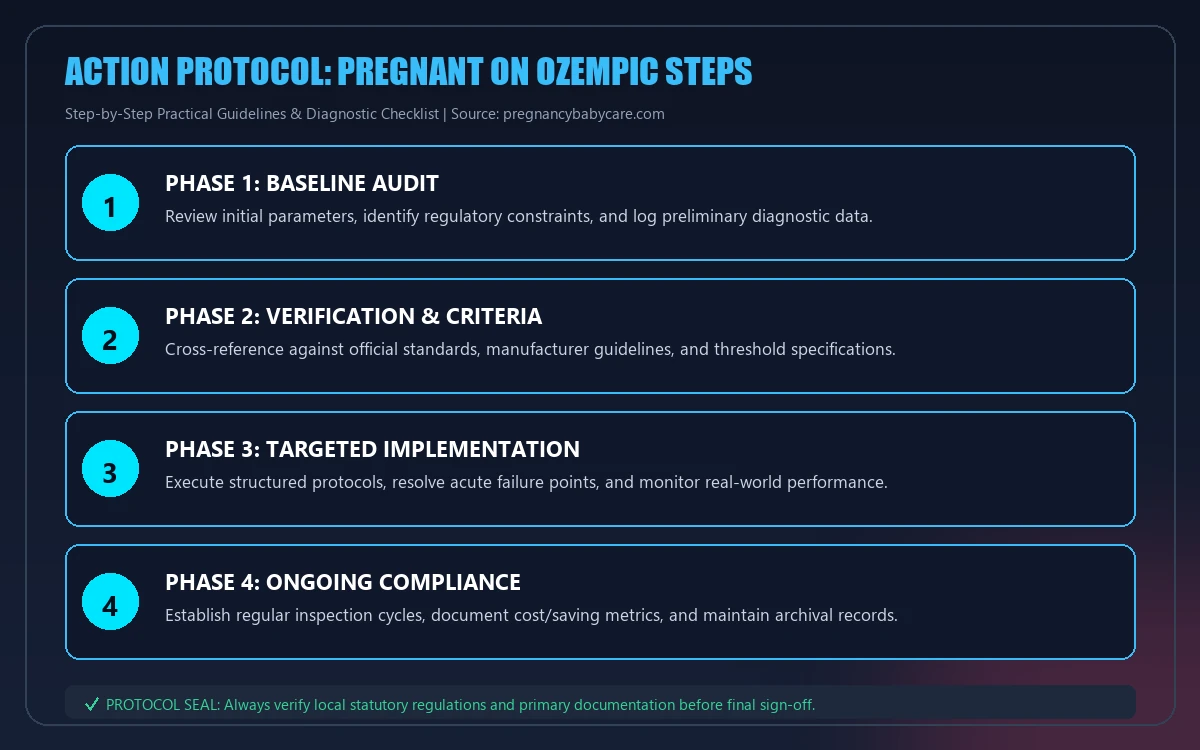
Figure 1: Six-step pregnancy-cessation pathway for semaglutide-exposed patients. Halt → Physician contact (24 h) → CGM deployment (48 h) → Insulin bridge (HbA1c ≥7.0%) → Targeted anatomy ultrasound (18–20 wk) → Registry enrollment. Follows ACOG Practice Bulletin and ADA Standards of Care 2024.
What the Teratogenicity Data Actually Show
Panic-driven pregnancy termination is not supported by current evidence, but the evidence base remains limited and must be characterized precisely. Published gestational cohort data on GLP-1 receptor agonist exposure in early pregnancy have not demonstrated a dramatic elevation in major congenital malformation rates compared to unexposed pregnancies in women with similar metabolic profiles. The background rate of major congenital malformations in the general population runs between 2% and 4%; metabolic disease itself independently elevates that baseline, so any marginal signal from GLP-1 exposure must be interpreted against that elevated background rather than against the general population rate. Ongoing EMA PRAC pharmacovigilance review and MotherToBaby prospective registry data represent the primary human gestational evidence streams currently accumulating on this question.
Animal reproductive toxicology data tell a different story, which is why FDA labeling carries its warning. Rodent and rabbit studies at exposures substantially above human therapeutic doses produced embryolethality and structural defects. GLP-1 receptors in rodents are expressed in early embryonic tissue at higher densities than in human embryos, making cross-species extrapolation unreliable for absolute risk quantification. Human registry data, while still accumulating, have not replicated the rodent signal at clinical doses — but absence of replication is not exclusion of risk.
The real teratogenic threat in this clinical scenario is uncontrolled maternal hyperglycemia following abrupt cessation, particularly in a patient whose glycemic control depended substantially on the drug. Achieving euglycemia, operationally defined as fasting glucose 70–95 mg/dL and one-hour postprandial glucose below 140 mg/dL per ADA Standards of Care in Diabetes, Section 8, becomes the primary therapeutic objective from the moment the drug stops.
Safety Considerations, Contraindications & Clinical Supervision
🚨 Emergency Red Flags — Seek Same-Day Care
Persistent epigastric pain radiating to the back (possible pancreatitis), fasting glucose above 200 mg/dL, severe nausea with inability to maintain oral hydration, or hypoglycemia symptoms (shakiness, confusion, diaphoresis) all require same-day clinical evaluation. Call 911 for loss of consciousness or severe hypoglycemia unresponsive to oral glucose.
Abrupt semaglutide cessation in a non-diabetic patient using Wegovy for obesity carries a different risk profile than cessation in a patient with type 2 diabetes. In the obesity-only population, the primary concern shifts from glycemic rebound to weight trajectory. The STEP-1 trial extension in Diabetes, Obesity and Metabolism documented that one year after semaglutide 2.4 mg withdrawal, participants regained approximately two-thirds of prior weight loss, with cardiometabolic markers reverting toward baseline. Gestational weight gain layered on top of rebound adiposity compounds obstetric risk across gestational diabetes, preeclampsia, and macrosomia, warranting early dietitian and maternal-fetal medicine involvement. STEP-1 and SURMOUNT-4 are weight-regain trials in non-pregnant adults; their rebound data inform mechanistic inference about gestational risk, not direct gestational evidence.
Pancreatitis surveillance is mandatory. Semaglutide carries a labeled warning for acute pancreatitis, and pregnancy itself elevates baseline pancreatitis risk through progesterone-mediated biliary stasis and hypertriglyceridemia. Any patient with prior pancreatitis or gallbladder disease who is now working through the pregnant on Ozempic steps enters a period requiring vigilant symptom monitoring. Persistent epigastric pain radiating to the back warrants same-day evaluation.
Renal hydration status demands attention in early pregnancy, when nausea and vomiting compound GI effects that may persist for days after the last semaglutide dose. Semaglutide’s 168-hour half-life means nausea does not stop at injection cessation; residual receptor occupancy declines over weeks. Adequate oral hydration and, if necessary, antiemetic management prevent prerenal azotemia that can complicate early gestational renal physiology.
Oral contraceptive absorption is no longer a relevant interaction concern once pregnancy is confirmed, but it warrants documentation for the postpartum contraception conversation. Semaglutide slows gastric emptying substantially, reducing peak plasma concentrations of oral contraceptives by up to 20% in pharmacokinetic studies — a clinically meaningful interaction that may have contributed to contraceptive failure in some pregnancies now presenting as pregnant on Ozempic steps scenarios.
Hypoglycemia risk with sulfonylureas applies to any patient on combination therapy. Removing semaglutide’s incretin-mediated insulin secretion augmentation while continuing a sulfonylurea creates asymmetric hypoglycemia risk, particularly in the first trimester when caloric intake may already be reduced by nausea. Sulfonylurea dose reduction or discontinuation requires immediate prescriber review.
For patients who were on tirzepatide (Zepbound) rather than semaglutide, the clinical sequence is identical in principle but pharmacokinetically faster. The FDA Zepbound prescribing information documents a mean terminal elimination half-life of 120 hours (five days), yielding a washout period of approximately 25 days to reach sub-steady-state concentrations. Tirzepatide’s dual GIP and GLP-1 receptor agonist mechanism does not change the pregnancy management algorithm: the drug stops, glucose surveillance begins, and specialist referral follows.
Comparative Pharmacokinetic Reference: Semaglutide vs. Tirzepatide
| Parameter | Wegovy (Semaglutide) | Zepbound (Tirzepatide) |
|---|---|---|
| Active Molecule | Semaglutide | Tirzepatide |
| Receptor Affinity | Selective GLP-1 agonist | Dual GIP + GLP-1 agonist |
| Mean Terminal Half-Life | 168 hours (7 days) | 120 hours (5 days) |
| Labeled Starting Floor | 0.25 mg weekly × 4 weeks | 2.5 mg weekly × 4 weeks |
| Titration Interval | 4 weeks per step | 4 weeks per step |
| Approximate Washout (5 half-lives) | ~35 days | ~25 days |
| Boxed Warning | Thyroid C-cell tumors (rodent) | Thyroid C-cell tumors; MTC/MEN2 personal or family history |
| Pregnancy Labeling (PLLR) | Not recommended; human data insufficient | Not recommended; human data insufficient |
Sources: FDA Wegovy prescribing information; FDA Zepbound prescribing information.
The SURPASS-2 head-to-head trial in NEJM compared tirzepatide at 5 mg, 10 mg, and 15 mg against semaglutide 1.0 mg weekly in type 2 diabetes — not against the 2.4 mg Wegovy obesity dose , and demonstrated superior HbA1c and body-weight reductions across all tirzepatide doses. SURPASS-2 is an agent-differentiation trial in T2D; it provides no data bearing on pregnancy cessation management. Both drugs stop at confirmation of pregnancy, regardless of their comparative efficacy in non-pregnant populations.
No head-to-head trial defines an exact sequential switching timeline between semaglutide and tirzepatide. Initiating at labeled starting floor doses — 0.25 mg weekly for semaglutide or 2.5 mg weekly for tirzepatide , is required by FDA labeling regardless of prior exposure or prior dose level. Prescribers must not presume dose equivalence between agents, as ADA Standards of Care in Diabetes, Section 8 explicitly reinforces.
Weight Regain, Glycemic Rebound, and Gestational Risk
Pregnancy creates a forced withdrawal scenario. The SURMOUNT-4 trial in JAMA established that patients continuing tirzepatide maintained or extended weight reduction by an additional 5.5%, while those randomized to placebo regained 14.0% of body weight by week 88. A patient who lost 15% of body weight on semaglutide before conception faces a rebound trajectory across a 40-week pregnancy that could substantially elevate gestational diabetes incidence, independent of any direct drug effect on the fetus. SURMOUNT-4 studied non-pregnant adults; mechanistic extrapolation to gestational physiology is reasonable but not directly evidenced by trial data.
Gestational diabetes diagnosed after GLP-1 withdrawal is managed with the same dietary, monitoring, and insulin protocols as de novo gestational diabetes. Prior semaglutide exposure does not modify gestational diabetes treatment algorithms. What it does modify is clinical index of suspicion: these patients warrant earlier glucose tolerance screening, ideally at the first prenatal visit rather than the standard 24-to-28-week window, because their glycemic control was pharmacologically supported and may deteriorate faster than in a drug-naive patient.
Clinicians reviewing the pregnant on Ozempic steps with their patients should frame the weight-regain risk explicitly. Gestational weight gain guidelines from ACOG are calibrated to pre-pregnancy BMI, and a patient rebounding from GLP-1-mediated weight loss may enter pregnancy at a BMI that underestimates her metabolic risk. Early dietitian involvement, referenced in the ADA Standards of Care, is a primary clinical recommendation in this population, not an optional add-on.
For additional context on managing glucose in pregnancy, see our related resources: Gestational Diabetes: Monitoring and Management, Insulin Safety in Pregnancy, GLP-1 Alternatives During Pregnancy, and Prenatal Nutrition for Metabolic Health.
Frequently Asked Questions
If I have type 1 diabetes, what changes about stopping semaglutide in pregnancy?
Type 1 diabetes requires immediate insulin dose reassessment, coordinated between the endocrinologist and the obstetric team. Semaglutide is not standard-of-care in type 1 diabetes management, but off-label use occurs to reduce insulin requirements or body weight. In type 1 diabetes, endogenous beta-cell reserve is negligible by definition, so cessation of semaglutide does not produce the same incretin-withdrawal glycemic rebound seen in type 2 diabetes. The management priority is tightening basal-bolus insulin titration with CGM deployed within 24 hours, since first-trimester fetal cardiac and neural tube risk from maternal hyperglycemia is time-sensitive. Insulin requirements in type 1 pregnancy are managed entirely through dose adjustment; GLP-1 cessation does not alter that algorithm.
How quickly does semaglutide clear after stopping during early pregnancy?
Based on the mean terminal elimination half-life of 168 hours documented in FDA labeling, plasma concentrations fall by approximately half every seven days. After five half-lives — roughly 35 days , less than 5% of steady-state drug remains detectable. Fetal exposure during this declining concentration window cannot be quantified from standard clinical testing; the pregnancy exposure registry exists precisely to capture outcomes data across this pharmacokinetic tail. Stopping immediately minimizes cumulative fetal exposure but does not produce instantaneous clearance, which is why CGM deployment in the first 48 hours matters more than waiting for drug levels to fall.
Does stopping Wegovy when pregnant require a formal taper to protect the baby?
No taper protocol exists in FDA labeling or major clinical guidelines for GLP-1 agonist cessation in pregnancy. Tapering would extend fetal drug exposure without any compensating clinical benefit, given that the drug’s long half-life already produces a built-in pharmacokinetic taper as concentrations decline over five weeks. Immediate cessation, followed by glycemic monitoring in patients with diabetes or pre-diabetes and dietitian-guided nutritional planning to buffer caloric intake changes, is the appropriate sequence. Stopping Wegovy when pregnant means a clean stop, not a graduated reduction.
Can I restart a GLP-1 receptor agonist postpartum if I am not breastfeeding?
Postpartum restart is a separate clinical decision from the pregnant on Ozempic steps sequence and requires its own risk-benefit evaluation. For patients who are not breastfeeding, the metabolic rationale for restarting a GLP-1 agonist is often strong, particularly in patients with type 2 diabetes or obesity-related comorbidities. For patients who are breastfeeding, semaglutide’s presence in human breast milk has not been adequately studied; animal lactation data show drug transfer to offspring, and FDA labeling advises against use during breastfeeding. Postpartum restart decisions require coordinated discussion with the prescribing clinician and, if breastfeeding, a lactation specialist. No current clinical guideline endorses routine GLP-1 agonist use during lactation.
References
-
Aronne LJ, et al. Continued Treatment With Tirzepatide for Maintenance of Weight Reduction in Adults With Obesity (SURMOUNT-4). JAMA. 2024;331(1):38–48. https://pubmed.ncbi.nlm.nih.gov/38078870/. Key finding: Tirzepatide continuation maintained weight reduction; placebo arm regained 14.0% body weight by week 88. Contextual note: weight-regain trial in non-pregnant adults; extrapolation to gestational risk is mechanistic inference.
-
Wilding JPH, et al. Weight regain and cardiometabolic effects after withdrawal of semaglutide: The STEP 1 trial extension. Diabetes Obes Metab. 2022;24(8):1553–1564. https://pubmed.ncbi.nlm.nih.gov/35441470/. Key finding: Participants regained two-thirds of prior weight loss one year after semaglutide 2.4 mg withdrawal; cardiometabolic improvements reverted toward baseline. Contextual note: weight-regain trial in non-pregnant adults.
-
Frías JP, et al. Tirzepatide versus Semaglutide Once Weekly in Patients with Type 2 Diabetes (SURPASS-2). N Engl J Med. 2021;385(6):503–515. https://pubmed.ncbi.nlm.nih.gov/34170647/. Key finding: Tirzepatide 5 mg, 10 mg, and 15 mg achieved superior HbA1c and body-weight reductions vs. semaglutide 1.0 mg in type 2 diabetes. Contextual note: comparison against 1.0 mg, not the 2.4 mg Wegovy obesity dose; agent-differentiation background only.
-
FDA Center for Drug Evaluation and Research. Wegovy (semaglutide injection) Full Prescribing Information. 2023. https://www.accessdata.fda.gov/drugsatfda_docs/label/2023/215256s007lbl.pdf. Key finding: Mean terminal elimination half-life 168 hours; mandatory initiation at 0.25 mg weekly for 4 weeks; PLLR Pregnancy subsection states use is not recommended; human data insufficient to establish or exclude risk.
-
FDA Center for Drug Evaluation and Research. Zepbound (tirzepatide injection) Full Prescribing Information. 2023. https://www.accessdata.fda.gov/drugsatfda_docs/label/2023/217806s000lbl.pdf. Key finding: Mean terminal elimination half-life 120 hours; mandatory starting dose 2.5 mg weekly for 4 weeks; boxed warning for MTC/MEN2 history; PLLR Pregnancy subsection states use is not recommended.
-
American Diabetes Association. Standards of Care in Diabetes: Obesity and Weight Management. Diabetes Care. 2024;47(Suppl 1):S158–S178. https://diabetesjournals.org/care/article/47/Supplement_1/S158/153954/8-Obesity-and-Weight-Management-for-the. Key finding: Incretin mimetic agents carry non-identical receptor binding profiles; dose equivalence between agents must not be presumed.